Are you ready for a shift in packaging?
Packaging is one of those things that most companies don’t think about too much, until it hits them in the face. Literally. A shipment arrives damaged. Or a client asks, “Is this recyclable?” Then you remember the EU Packaging and Packaging Waste Regulation (PPWR) looming over the horizon. Cue moulded pulp packaging.
We’ve been in this business long enough to see that those who wait tend to scramble. But those who start early? They often end up saving money, time, and a lot of stress. And yes, they get the bonus of looking forward-thinking while doing it.
At Moulded Pulp Packaging Europe, we’ve guided dozens of industrial companies: automotive, electronics, home appliances,… through exactly this kind of transition. Our main takeaway: planning early beats rushing later, every time.
Breaking down PPWR
The PPWR can sound technical, but here’s the gist:
Recyclable or reusable by 2030. No ifs, ands, or buts.
Extended Producer Responsibility (EPR). You’re financially and operationally responsible for the packaging waste you create.
Material reduction targets. Plastics and complex composites are under scrutiny; simpler solutions are encouraged.
Circular design. Packaging should be reusable or recyclable without complicated processing.
Now, if you’re reading this and thinking, “That sounds expensive,” we hear you. It can be, but here’s the thing. Ignoring it is usually more expensive in the long run.
Why moulded Pulp packaging fits
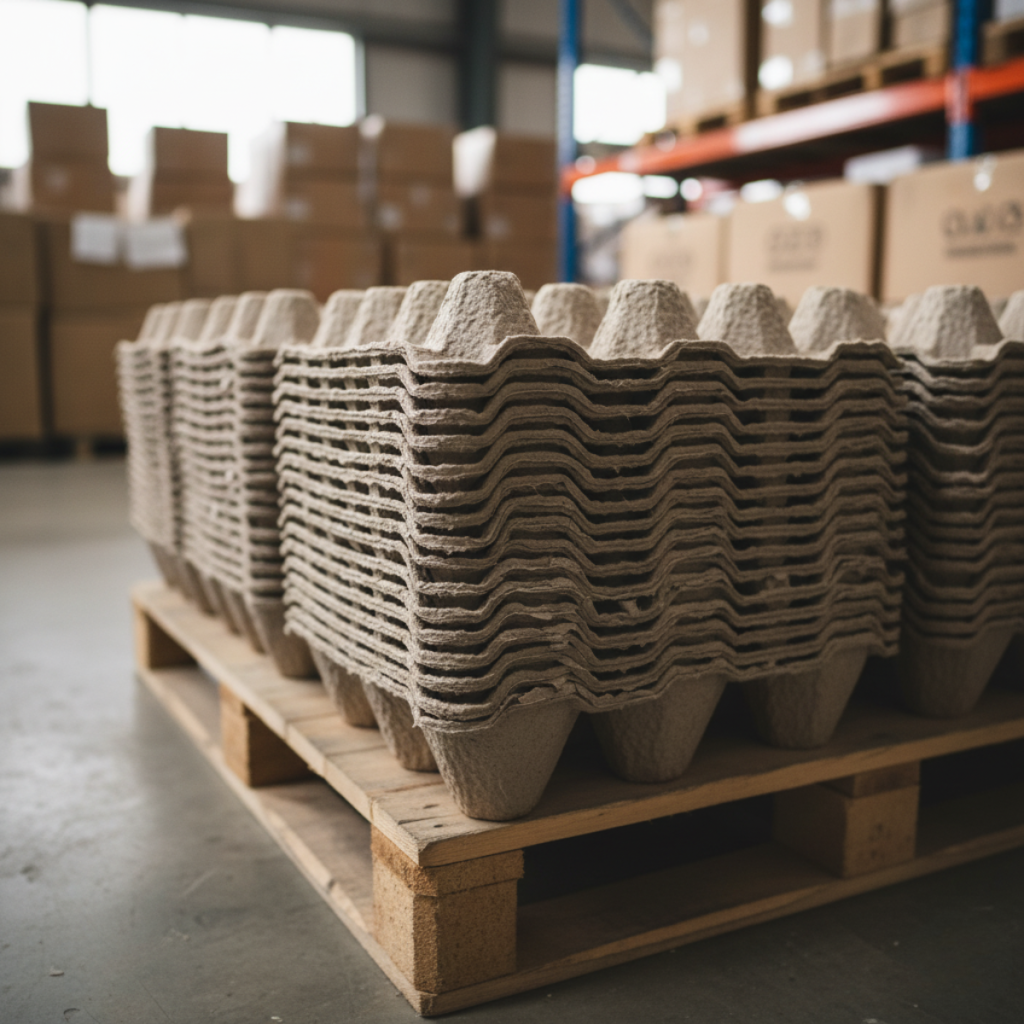
So, what is moulded pulp packaging? Think of those paper trays holding electronics or appliance parts. Simple, right? But there’s a lot going on under the hood.
Made from recycled or virgin paper fibers.
Pressed into protective shapes.
Lightweight but surprisingly strong.
We’ve had clients sceptical about strength. Fair question. But once tested, it usually performs as well as foam or plastic inserts, sometimes even better. And the environmental impact? Significantly lower.
Other reasons it works:
Sustainability built-in. Recyclable, sometimes compostable.
Customizable. Inserts, trays, or protective shells designed to your product.
Using sustainable materials is noticed not just by regulators, but by clients and partners.
We often tell buyers, “It’s not about looking good, it’s about being responsible and ready.”
How moulded pulp packaging supports PPWR compliance
Here’s a point we can’t emphasize enough: moulded pulp is naturally aligned with the PPWR. That means less redesign, less stress, fewer headaches.
Recyclable in standard streams. No special processing.
Less material waste. Lightweight, yet protective.
Single-material simplicity. Easier recovery and recycling.
Supports EPR reporting. Real, measurable reduction in waste.
In practice, companies who adopt early don’t just tick regulatory boxes — they also simplify logistics, reduce material complexity, and lower costs over time.
Benefits of moulded pulp packaging for industrial buyers
If you’re responsible for procurement, operations, or sustainability, here’s what we’ve consistently seen:
Peace of mind on compliance.
Early adoption avoids last-minute redesigns.
Cost savings over time.
Not necessarily per unit: more in logistics, waste handling, and avoiding regulatory penalties.
Streamlined operations.
One material type, fewer suppliers, simpler tracking.
Brand credibility.
Clients notice real sustainability, not just buzzwords.
Environmental impact of moulded pulp pakaging.
Less waste, fewer emissions, measurable difference.
And yes, we admit it, some companies are hesitant. But in our experience, hesitation usually costs more than action.
How to start the transition to moulded pulp packaging?
Here’s what we recommend (step by step, not as theory, we’ve done this dozens of times):
- Audit your current packaging. Figure out what’s recyclable, what’s not, and where you can get quick wins.
- Partner with experts. Work with suppliers who understand both the material and regulatory landscape.
- Prototype and test. Small batches first. Make sure protection, fit, and handling work for your products.
- Educate your teams. Procurement, production, logistics, marketing, everyone should know the plan.
- Communicate your change. Clients and stakeholders love transparency.
(not so) Funny story: one client delayed testing and thought they could just “switch at the last minute.” Guess what? The pilot batch failed shipping tests, and they ended up paying more than if they’d planned. Lesson learned: small pilots early save headaches later.
FAQ
Q1: When does PPWR take effect?
Implementation starts in 2025, full recyclability required by 2030.
Q2: Why switch to moulded pulp now?
Early adoption secures supply, allows testing, and avoids last-minute regulatory scramble.
Q3: How does it compare to plastic or foam?
Shock absorption, stackability, and protection are very comparable. Plus, easier to recycle.
Q4: Is it really recyclable?
Yes. Moulded pulp is cellulose-based. Some versions are industrially compostable.
Q5: How can we check compliance?
Audit current materials, labelling, and end-of-life handling. Expert suppliers can help.
Closing Thoughts
The PPWR is a wake-up call. Not just for compliance, but for smarter, more sustainable packaging.
Moulded pulp is simple, effective, and ready today. It reduces regulatory risk, protects products, and demonstrates responsibility. No gimmicks. No unnecessary complexity. Just real-world solutions.
Contact us today to schedule a packaging audit or discuss your PPWR-ready project. Start early, pilot small, and move confidently.