Say “moulded pulp packaging” and most people picture egg cartons. Light, cheap, maybe a bit flimsy. That used to be true, but it really does not reflect what pulp packaging can do today.
These days, pulp trays handle way more than eggs. You might be surprised, but laptops, car parts, and even big appliances travel safely in them. Products cross oceans without a scratch. It turns out that pulp is not only eco-friendly but also surprisingly strong.
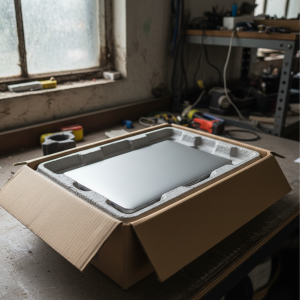
Strength in packaging is more than just holding weight. You might wonder, how does a tray behave when it’s stacked, bent, or dropped? Will it survive a busy warehouse without crushing the contents? Can it twist under pressure? Will it absorb shocks without letting fragile items get damaged? Modern pulp packaging is made to handle these challenges, and it really performs.
So why does it work so well? There are three main reasons: the fibers, the density, and the design.
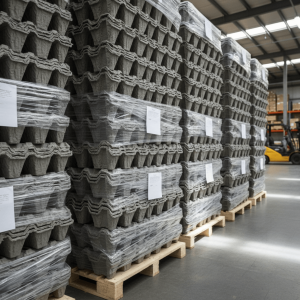
High-quality fibers, whether recycled or virgin, make the material strong when stressed. How the fibers are pressed during production matters too. Too loose and the tray flops around. Too tight and it can crack. Find the right balance, and you get a tray that is firm yet cushioned enough to protect what’s inside.
Design plays a big role as well. Ribs and curves increase stiffness and spread pressure evenly so the tray keeps its shape. Stackable edges help everything line up neatly when loaded. Some trays even include coatings or hybrid fibers to resist humidity. This might sound like a small detail, but in real shipping conditions, it makes a huge difference.
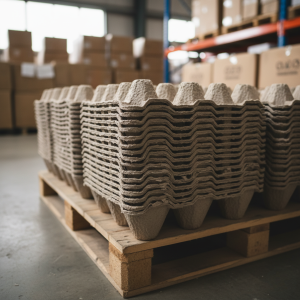
And the numbers? They’re impressive, even without exaggeration.
Compression tests, believe it or not, show that some trays can handle around sixty pounds per square inch. That is plenty for warehouse stacking. Tensile strength can reach about forty newtons per square millimeter, which puts it on par with strong cardboard. Shock absorption is excellent, so electronics or glassware can survive bumps and drops during transport.
In short, pulp is not just greener, it is seriously reliable.
The range of uses is huge. Electronics travel in custom trays that hold each component in place. Heavy automotive parts? No problem. Custom inserts keep them secure. Even delicate items like wine bottles, ceramics, or cosmetics arrive safe, thanks to shapes that cradle them perfectly.
Little design tweaks make a big difference. Ribs add strength. Contoured pockets prevent things from sliding around. Stackable edges keep trays aligned when piled high. Every curve has a purpose. That is why pulp trays can perform just as well as traditional packaging.
Some people still assume that sustainable packaging means weaker packaging. That is not the case. Modern pulp is fully recyclable, biodegradable, and protects products just as well as many conventional materials. You really don’t have to compromise on strength to be eco-friendly.
When choosing pulp trays, a few things matter most. Fiber quality is essential, with refined or virgin fibers performing best. Density affects both support and shock absorption.
Stackability is key for pallets and warehouse storage. Need moisture resistance? Coated or hybrid trays do the trick. And design matters, too. Ribs, pockets, and other details determine how well your products are protected. Paying attention to these factors ensures reliable packaging.
Frequently Asked Questions
Can moulded pulp handle heavy products?
Absolutely. High-density trays can carry significant weight and remain stable when stacked.
What happens if a tray is dropped?
Pulp trays absorb impacts through fiber structure and smart design, keeping items safe.
Does moisture weaken the trays?
Plain pulp soaks up water, but coated or hybrid trays stay strong even in damp conditions.
Is pulp really eco-friendly?
Yes. It is made from recycled or virgin fibers, fully recyclable, and biodegradable.
How can I check strength before ordering?
Ask suppliers for test results, fiber type, density information, and real-world examples.
Moulded pulp packaging has evolved a lot over the years. It is strong, reliable, and sustainable. With the right fibers, production methods, and clever design, it can protect fragile and heavy items while still being eco-friendly. It proves that tough, environmentally responsible packaging is possible, without compromise.