Introduction: A changing regulatory landscape in EU packaging
Packaging legislation in the European Union is undergoing one of its most significant updates in recent years. The Packaging and Packaging Waste Regulation (PPWR), expected to come into force in the second half of 2025, sets out new mandatory requirements for recyclability, reuse, and clearer product labelling.
Simultaneously, Extended Producer Responsibility (EPR) schemes are gaining ground across member states like Germany, France, and the UK, shifting the financial and logistical burden of packaging waste management back onto producers.
These shifts create both a challenge and an opportunity. Especially for companies using or producing moulded pulp packaging.
What is PPWR and why does it matter?
The Packaging and Packaging Waste Regulation (PPWR) is a Europe-wide legislative initiative proposed by the European Commission to address the increasing volume of packaging waste, particularly single-use plastic. It builds on the earlier Packaging Directive but introduces binding targets for:
- Packaging recyclability
- Reuse systems for B2B and B2C
- Mandatory recycled content for certain materials
- Ban on unnecessary packaging formats
The regulation aims to harmonize rules across the EU and minimize environmental impact from both the production and disposal of packaging. This means that any material used for packaging in Europe will need to demonstrate transparent end-of-life performance, and ideally, recyclability within existing national systems.
For companies operating internationally, these unified rules simplify compliance but raise the bar for sustainable design.
EPR: Extended Producer Responsibility and its financial impacts
EPR regulations, while not new, are becoming stricter and more widely enforced. In countries such as Germany (under the VerpackG system) and the UK (with its EPR scheme launched in 2023), producers must:
- Register with national packaging registries
- Report the types and volumes of packaging placed on the market
- Finance the collection, sorting, and recycling of that packaging
- Design packaging with recyclability in mind
The more difficult a material is to recycle, the higher the fees imposed on the producer. This is where moulded pulp packaging, often made from recycled paper fibers, gains a clear advantage. It’s widely accepted in existing paper recycling streams, making it a cost-effective and compliant choice.
How moulded pulp packaging aligns with new regulatory demands
Unlike plastic and certain composite packaging types, moulded pulp is:
- Easily recyclable in most EU waste streams
- Biodegradable and compostable, depending on finishing treatments
- Made from renewable or recycled materials
- Reusable in some industrial contexts
These attributes put it in a favourable position under both PPWR and EPR. However, not all pulp packaging is created equal. Producers must ensure:
- Proper labelling for recyclability (as required by PPWR)
- Low contamination risk (e.g., from coatings or inks)
- Optimized material weight to avoid overpackaging
Companies will need to document and justify these qualities during audits and in reporting under EPR schemes.
Key considerations: design, transparency, and cost
To remain competitive and compliant under PPWR and EPR rules, businesses using moulded pulp packaging should focus on:
- Transparent end-of-life data: Track and document how the packaging is recycled or decomposes. Be ready to share this with clients or regulatory bodies.
- Recyclable coatings or additives: Water-resistant or oil-resistant coatings must not prevent recyclability. Seek verified materials.
- Modular and efficient packaging formats: Avoid over-engineering. Designs should use only what’s needed for protection and transportation.
- Labeling compliance: Clear symbols and language help downstream users recycle correctly.
- LCA data: Consider lifecycle assessments to support the environmental benefits of your packaging compared to alternatives.
Case examples: pulp packaging in food, wine, and electronics
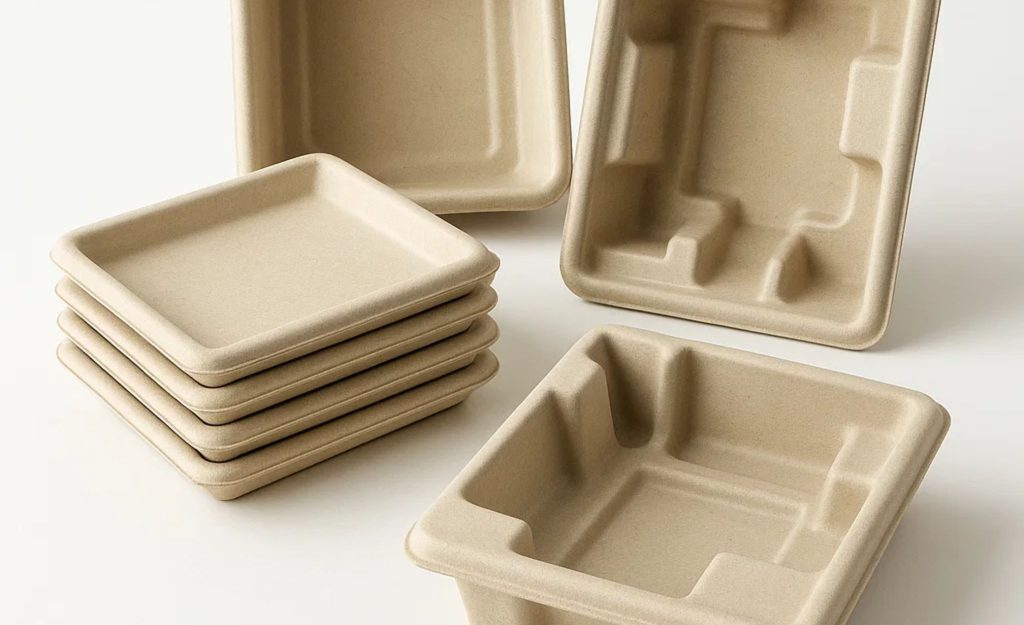
- Food sector: Several European brands have switched from plastic clamshells to moulded pulp trays for produce and bakery items. These trays are easily stacked, reduce waste, and meet hygiene standards when paired with food-safe liners.
- Wine & spirits: Premium producers increasingly use moulded pulp bottle shippers instead of polystyrene. They provide cushioning, reduce breakage, and comply with eco-packaging expectations.
- Electronics: Small appliances, phones, and accessories are often shipped with thermoformed pulp trays that replace plastic foams, improving recyclability and consumer perception.
Each of these sectors benefits not just from ecological benefits, but also from lower EPR-related fees and easier compliance with recyclability mandates.
Comparison table: pulp vs plastic vs bioplastic under PPWR
| Feature / Material | Moulded pulp | Plastic (PET/PE) | Bioplastic (PLA, etc.) |
| Recyclability (EU-wide) | High | Medium to High | Low to Medium |
| Compostability | Yes (if untreated) | No | Varies (needs industrial) |
| Accepted in curbside recycling | Yes | Varies | Rarely |
| EPR cost impact | Low | Medium to High | High (due to sorting) |
| PPWR compliance readiness | Strong | Medium | Uncertain |
Conclusion: preparing for packaging 2025
As PPWR and EPR regulations come into full effect across Europe, companies will face increasing pressure to adopt packaging that is not only functionally sound, but also demonstrably recyclable, reusable, or compostable.
Moulded pulp packaging is already aligned with many of these goals and offers a viable path forward. Still, success depends on more than just switching materials. Companies must prioritize transparency, design efficiency, and regulatory compliance as they adapt to this new landscape.
Frequently asked questions (FAQ)
- What is the difference between PPWR and the old EU Packaging Directive?
The Packaging and Packaging Waste Regulation (PPWR) replaces the old directive and sets legally binding rules for all member states, rather than guidelines. It enforces stricter targets for recyclability, reuse, and waste reduction.
- How does EPR affect my company’s packaging choices?
If you’re placing packaged goods on the market in countries with EPR, you will likely need to report packaging volumes, pay fees, and demonstrate recyclability. Materials that are hard to recycle result in higher fees, making recyclable options like moulded pulp more attractive.
- Is all moulded pulp packaging recyclable?
Not always. While most moulded pulp is recyclable, additives, coatings, or inks can affect this. Make sure to use verified recyclable materials and follow national guidelines for pulp packaging design.
- Can moulded pulp packaging be reused?
In B2B settings, such as transporting electronics or tools, some moulded pulp formats can be reused several times. However, in consumer-facing applications, it is typically single-use and recyclable.
- What’s the next step for businesses?
Audit your current packaging portfolio, evaluate recyclability and EPR costs, and explore moulded pulp formats that align with PPWR’s 2025 requirements. Collaboration with packaging suppliers is key.