Country-by-Country: How moulded pulp packaging aligns with EU packaging regulations
For companies shipping across Europe, choosing the right packaging material isn’t just about protection, it’s about legal compliance, brand responsibility, and long-term cost-efficiency.
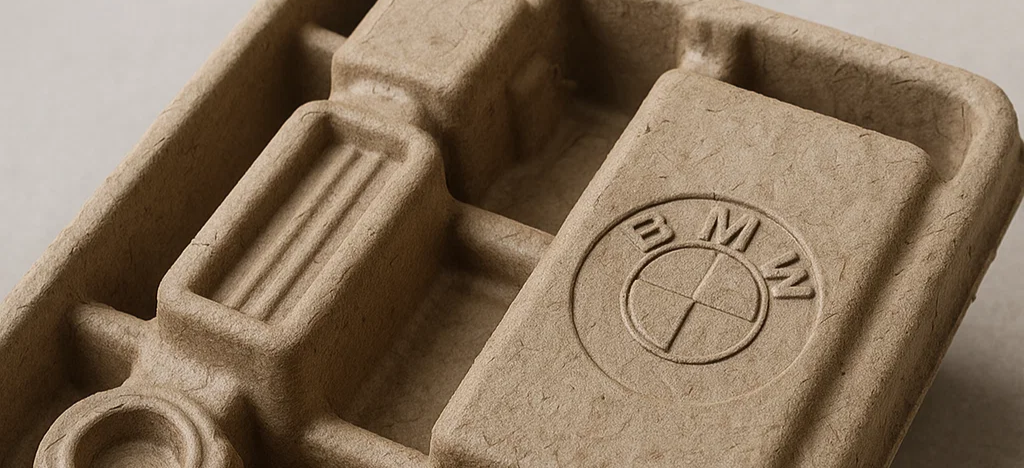
Moulded pulp packaging, made from recycled or virgin paper fibres, is rapidly becoming a preferred alternative to plastic and EPS in many industries. But how well does it align with packaging regulations in different EU markets?
Here’s a country-by-country look at how moulded pulp packaging fits within current laws and expectations in France, Germany, Italy, and the Nordic countries.
France: Going all-in on plastic phase-out
France is among the most aggressive EU countries in reducing single-use plastics.
- Since 2021, France has progressively banned plastic packaging for fruits, vegetables, toys, and some electronics.
- The AGEC Law (Anti-Waste Law for a Circular Economy) mandates companies to use recyclable or compostable materials.
- France strongly promotes home compostable and fibre-based materials.
✓ Moulded pulp fits perfectly here, especially for consumer electronics, cosmetics, and retail packaging. Compostable versions are even better positioned.
Germany: Focused on recyclability and EPR
Germany’s Verpackungsgesetz (Packaging Act) emphasizes:
- Producer responsibility through mandatory registration with the Central Packaging Register (Zentrale Stelle).
- Recyclability and design-for-recycling.
- Material-specific fees that encourage fibre-based solutions.
✓ Moulded pulp is seen as a compliant and low-fee material, easily recyclable in Germany’s paper waste stream. It also avoids the complexity of multi-material packaging penalties.
Italy: Incentives for sustainable materials
Italy has adopted EU-wide directives but also encourages greener choices via incentives:
- Offers tax credits to companies using packaging made from recycled materials.
- Promotes a national eco-label (Made Green in Italy) for sustainable product-packaging combinations.
✓ Moulded pulp packaging, especially made from post-consumer paper, can qualify companies for financial benefits and labelling perks.
Nordic countries: Leaders in circular packaging policies
Nordic nations (Sweden, Denmark, Norway, Finland) lead with:
- Strong focus on circular economy targets and waste minimization.
- Public procurement policies that favour recyclable and biodegradable materials.
- High landfill taxes and bans pushing companies towards recyclable alternatives.
✓ Moulded pulp is widely accepted and even preferred in B2B and public-sector packaging, including medical, electronics, and hardware.
Summary Table: Moulded Pulp Fit by Country
| Country | Legal Fit for Moulded Pulp | Key Regulation Drivers | Business Opportunities |
| France | Excellent | Plastic bans, AGEC Law | Consumer goods, electronics |
| Germany | Very Good | Verpackungsgesetz, EPR, recycling fees | OEM, e-commerce, industrial |
| Italy | Very Good | Tax credits, eco-labeling | Retail packaging, cosmetics |
| Nordics | Excellent | Circular economy goals, landfill taxes | Medical, public sector, tech goods |
Final thoughts: Packaging isn’t just a box, It’s a compliance strategy
Choosing moulded pulp isn’t only about sustainability—it’s also a strategic move that helps your business stay ahead of complex, evolving EU laws.
By understanding country-specific packaging laws, you can:
- Reduce compliance risks
- Save money on materials and fees
- Build a more responsible brand image
Send us an inquiry to discuss moulded pulp packaging options tailored for your export markets across Europe.
FAQ
Q1: Is moulded pulp accepted in all European recycling systems?
Yes, it’s classified as paper/cardboard and is accepted in most EU countries’ paper recycling streams.
Q2: Can moulded pulp be certified for composability?
Yes, depending on the formulation. Look for EN 13432 certification if targeting composability claims.
Q3: Are there country-specific labels needed for moulded pulp packaging?
Not always, but some countries (like Italy) offer incentives if you label packaging with environmental info.